Choosing a Portable Home Company in NZ for Consents

Matt Higgs
Placing a portable home on your property in New Zealand is one of the most practical ways to add living space. But before the build begins, there is one step that shapes the entire project: building consent for portable homes. Getting this right from the start determines how smoothly the rest of the process runs, from site preparation through to move-in day.
This guide walks you through every stage of the consent process, explains the different approvals you may need, and shows you what to look for in a portable home company that manages consents, site works, and delivery on your behalf.
Premium Portable Homes can handle the entire journey for you, including council liaison, Code of Compliance, and on-site installation. By the end of this guide, you will know exactly what questions to ask, what documents to prepare, and how to keep your project on track.
Key Takeaways: Choosing a Portable Home Company in NZ for Consents
- Building consent is legally required for any portable home intended for permanent residential living in New Zealand.
- A reliable portable home company manages consent applications, council liaison, and documentation on your behalf.
- You may need up to four types of approval: building consent, relocate consent, resource consent, and development contributions.
- Premium Portable Homes delivers every home with a Code of Compliance Certificate and end-to-end project management.
- Choosing a company that handles site works and delivery reduces delays and avoids costly compliance issues later.
Why Building Consent Matters for Portable Homes in NZ
Under the Building Act 2004, any dwelling intended for permanent occupation must meet New Zealand Building Code standards. Portable homes are no exception. A building consent confirms that your home has been designed and constructed to meet structural, safety, and durability requirements.
If you skip building consent, your home may not be approved for legal residential use. That means you could face restrictions on occupancy, difficulty with insurance, and challenges if you ever want to sell or rent the property.
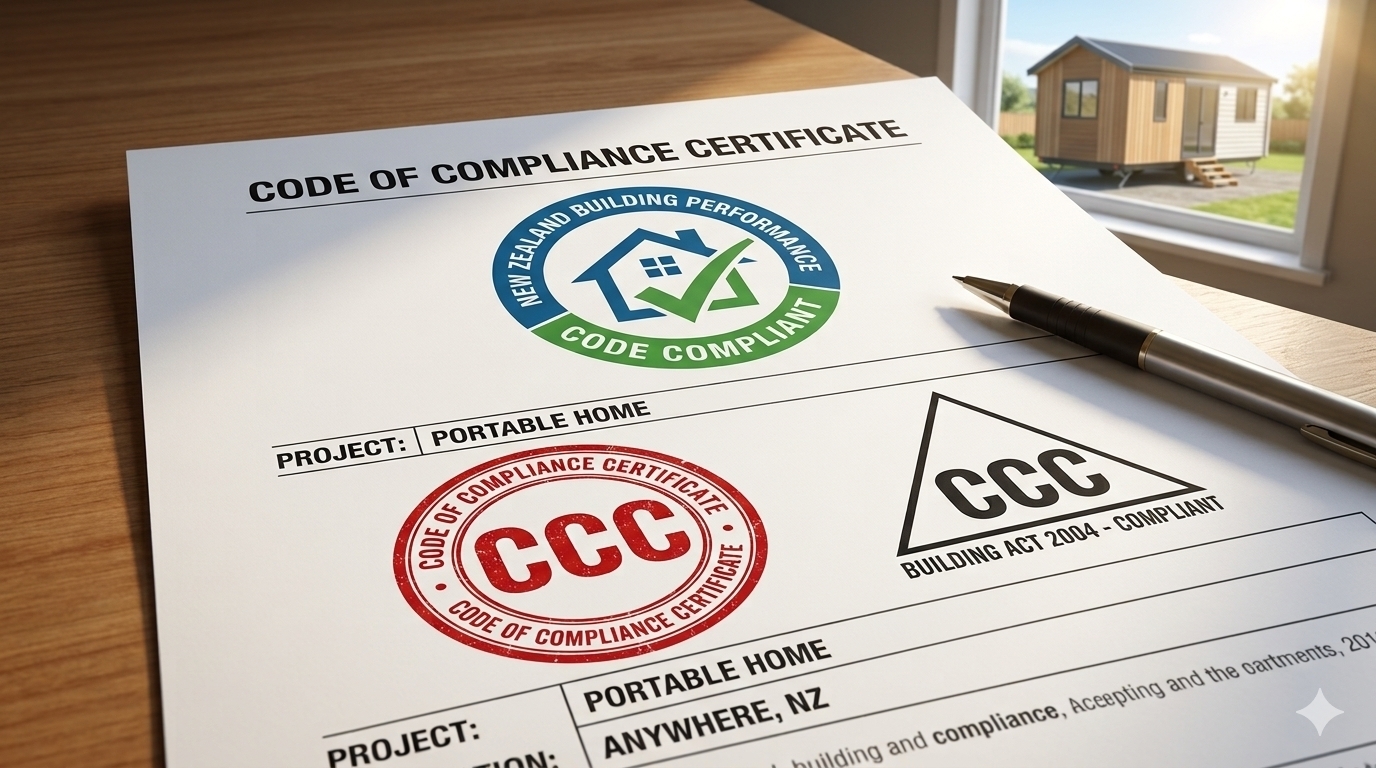
A Code of Compliance Certificate (CCC) is issued once inspections confirm the finished build matches the approved plans. This certificate is your proof that the home is safe, legal, and built right. Every Premium Portable Homes build is delivered with a CCC as standard.
What Types of Consent Do You Need for a Portable Home?
Depending on your property and council, you may need more than one type of approval. Here is what to expect.
Building Consent
This is the primary consent covering the construction of your portable home. It confirms the design, materials, and build method meet the Building Code. The building consent is usually obtained through the council where the home is manufactured.
For homes built off-site, the consent process runs in parallel with construction. This means your home can be built and inspected at the same time, saving weeks compared to traditional on-site builds.
Relocate Consent
A relocate consent is required when you move a completed building to a new site. It covers the foundations, service connections, and suitability of the land for your home. The council in the district where your home will be placed issues this consent.
Documentation typically includes house plans, a site plan showing setbacks and boundary distances, a geotechnical report, and a foundation design. Your portable home company should coordinate these requirements with the relevant tradespeople and movers.
Resource Consent
Resource consent relates to land use under the Resource Management Act. You may need it if your project affects boundary setbacks, creates a second dwelling on a section, or changes the land use classification in your council's district plan.
Not every project needs resource consent, but it is worth checking with your local council early. A good portable home company will flag potential resource consent triggers during the planning stage.
Development Contributions
Some councils charge development contributions when new dwellings are added to a property. These fees fund community infrastructure such as roads, water supply, and parks. The amount varies by council and depends on the scale of your project.
If you are adding a second dwelling, expect to set aside funds for development contributions. Ask your council about these fees early so they do not catch you off guard during the build.
How the Building Consent Process Works Step by Step
Understanding the timeline helps you plan realistically. Here is a typical sequence for a portable home project.
Step 1: Preliminary Design and Site Assessment
Your portable home company works with you to select a floor plan and assess your site. This includes checking access, ground conditions, zoning, and service availability. Premium Portable Homes offers a free site assessment to identify potential issues before any commitment.
Step 2: Gather Supporting Documents
Before submitting the consent application, you need several supporting documents. These may include working drawings, structural engineering designs, a geotechnical report (which can take four to six weeks to prepare), foundation design, and confirmation of council service connections.
Allow up to 12 weeks for this preparation phase. Rushing this step often leads to incomplete applications and delays later.
Step 3: Submit the Consent Application
Once all documents are complete, the application goes to the relevant council. Councils have a statutory minimum of 20 working days to process a building consent, though this clock pauses if they request further information.
Working with a company that understands each council's specific requirements can reduce the chance of requests for further information and keep the timeline moving.
Step 4: Off-Site Construction
While consent is being processed, your home can be built in a controlled factory environment. Off-site construction means quality can be closely managed, and weather delays are not a factor. Premium Portable Homes uses 100mm PIR structural insulated panels and thermal double glazing in every build.
Step 5: Delivery and Installation
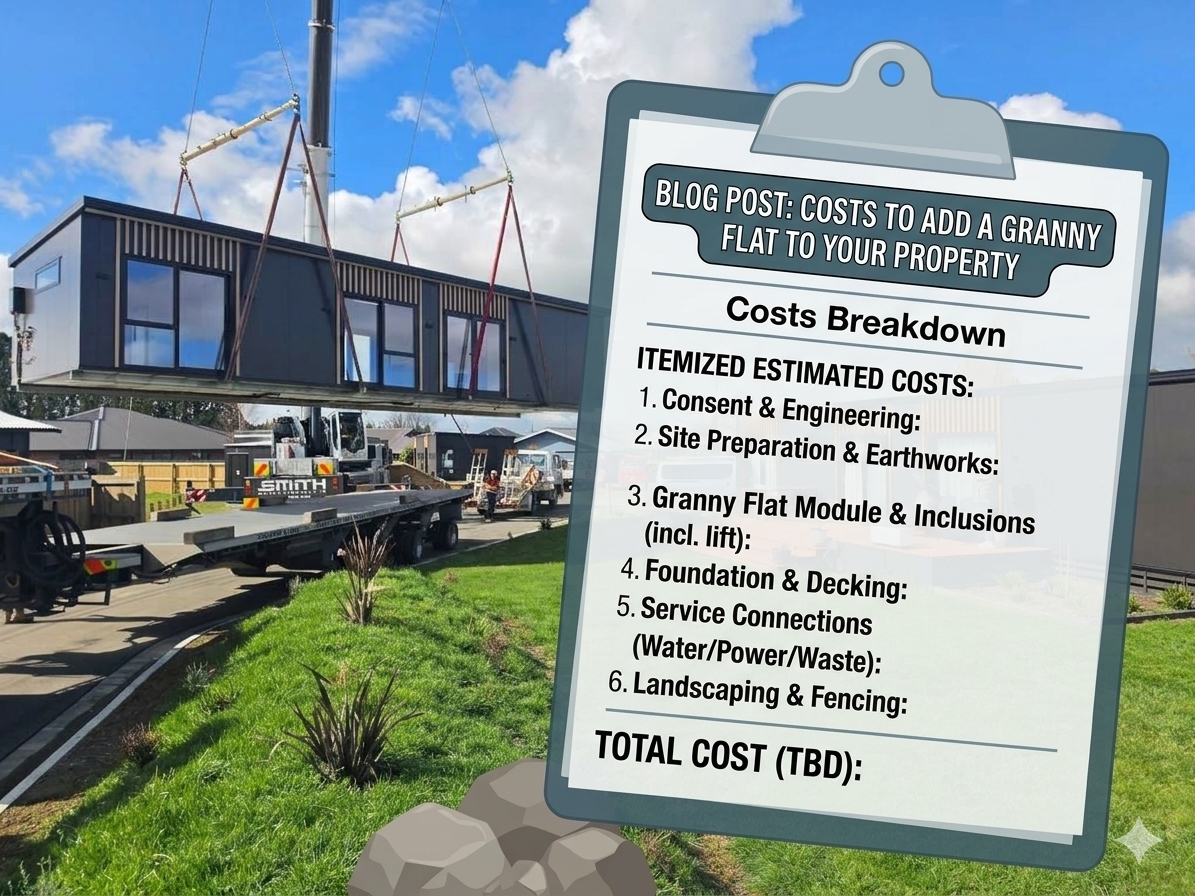
Once the home is complete and consent is granted, the home is transported to your site. Delivery is typically by truck, with a jacking system or crane used when access is limited. The home is then connected to services including power, water, and wastewater.
Premium Portable Homes manages delivery and installation as part of its turnkey service, with most homes delivered and installed in 10 to 12 weeks from the start of the build.
What to Look for in a Portable Home Company That Handles Consents
Not every portable home company manages the consent process for you. Some hand you a finished building and leave the rest to you and your own contractors. Here is what separates a full-service provider from the rest.
Does the Company Manage the Full Consent Process?
A full-service company handles the building consent application, council liaison, and all required documentation. They coordinate with engineers, surveyors, and council officers on your behalf. This removes a major source of stress and potential error from your project.
Look for a company that names the specific steps they manage. Vague claims about "assisting with consents" do not tell you who is actually responsible for getting the approval across the line.
Is Every Home Delivered with a Code of Compliance?
A Code of Compliance Certificate confirms that the build matches the approved consent and meets all Building Code requirements. Not all portable home companies deliver their homes with a CCC, so this is a critical question to ask.
A home with a CCC gives you legal clarity for residential use, confidence for insurance, and stronger footing if you ever sell. Every home from Premium Portable Homes includes this certificate.
Does the Company Handle Site Works and Service Connections?
Site preparation, foundation work, and connecting services such as power, water, and wastewater are all part of getting your home ready for living. Some companies stop at delivery and leave you to organise the rest.
A company that manages site works and service connections as part of the project gives you a single point of contact and a clearer timeline. This is especially important for rural or remote properties where coordinating multiple contractors can be complex.
What Guarantees and Certifications Back the Build?
A 10-year structural guarantee and registration is a strong signal of build quality and accountability. These credentials mean the company stands behind its work for the long term.
Ask whether the guarantee is a general promise or a formal, ins ured arrangement backed by an industry body. The difference matters when you need to make a claim years down the track.
How the Granny Flat Exemption Could Affect Your Project
New Zealand is introducing a building consent exemption for standalone dwellings up to 70 square metres, commonly called granny flats. According to Building Performance, this exemption is expected to be in force by early 2026.
Under the proposed rules, these dwellings can be built without a building consent if the design is simple and meets the Building Code, the work is carried out or supervised by licensed building professionals, and the homeowner notifies their local council before and after the build.
This does not mean compliance goes away. The home still needs to meet the same Building Code standards. The difference is in the approval pathway, not the quality requirement. For homeowners considering a compact portable home like The Hugo at 36m², this could simplify the process.
Common Mistakes to Avoid When Choosing a Portable Home Company
Choosing Based on Price Alone
A lower upfront cost often hides gaps in compliance, materials, or service. If the home does not come with a Code of Compliance, you may face additional costs for inspections, upgrades, or council remediation later.
Focus on what is included in the quoted price. Does it cover consent management, delivery, installation, and service connections? A clear, itemised quote tells you exactly what you are getting.
Not Checking the Company's Consent Track Record
Ask how many homes the company has consented, which councils they have worked with, and whether they have had applications declined. A company with experience across multiple councils will know the local requirements and common issues.
Overlooking Site Preparation Requirements
Your site needs to be ready before the home arrives. That means access for a truck or crane, prepared foundations, and connections for power, water, and wastewater. If these are not planned early, your delivery date can slip.
A full-service company like Premium Portable Homes coordinates site preparation alongside the build so everything is ready on time. You can track progress through their Buildertrend access, giving you visibility at every stage.
How Premium Portable Homes Manages Consents From Start to Finish
Premium Portable Homes takes ownership of the consent and compliance process so you do not have to manage it yourself. Here is what that looks like in practice.
The process starts with a design consultation where you choose your floor plan and customise the layout, finishes, and features. An in-house interior designer works with you to bring your vision to life. From there, the team prepares all consent documentation, submits the application, and liaises with the council on your behalf.
While consent is processed, your home is built off-site in a controlled environment using EPS structural insulated panels, colour steel cladding, and thermal double glazing. Every build is inspected during construction and signed off with a Code of Compliance Certificate before leaving the factory.
Once complete, the home is delivered to your site by truck, positioned using a jacking system or crane, and connected to services. The whole process typically takes 10 to 12 weeks. You can see completed builds on the Projects page to get a sense of what the finished result looks like.
Questions to Ask Any Portable Home Company Before You Commit
Before signing with any portable home company, work through this checklist. It will help you compare providers on the things that matter most for a smooth, compliant build.
- Do you handle the full building consent process, including council liaison and documentation?
- Is every home delivered with a Code of Compliance Certificate?
- What structural guarantee do you offer, and is it backed by an industry body?
- Do you manage site works, foundations, and service connections?
- Which councils have you worked with, and how many homes have you consented?
- Can I track the build progress during construction?
- What is included in the quoted price, and what is additional?
- How do you handle delivery to rural or hard-to-access sites?
A reputable company will answer these questions clearly and back up their claims with evidence, whether that is a list of completed projects, named certifications, or a transparent pricing breakdown.
In Conclusion: How to Choose the Right Portable Home Company for Your Consent Needs
The consent process does not have to be the hardest part of your portable home project. When you choose a company that manages consents, site works, and delivery from start to finish, you remove the guesswork and reduce the risk of costly delays.
Look for a company that delivers every home with a Code of Compliance Certificate, backs the build with a 10-year structural guarantee, and coordinates the full process from design through to installation. Premium Portable Homes delivers on all three, giving you confidence that your home is built right, certified right, and ready for living.
If you are ready to take the next step, explore the full range or get in touch to start your free site assessment.
FAQs About Choosing a Portable Home Company in NZ for Consents
Do all portable homes in New Zealand need building consent?
Yes, any portable home intended for permanent residential use must have a building consent under the Building Act 2004. A building consent exemption for standalone dwellings up to 70m² is expected by early 2026, but the home must still meet Building Code standards. Premium Portable Homes delivers every build with a Code of Compliance Certificate to confirm full compliance.
How long does it take to get building consent for a portable home in NZ?
Preparing supporting documents typically takes up to 12 weeks. Once submitted, councils have a statutory minimum of 20 working days to process the application, though this pauses if they request additional information. Premium Portable Homes manages this timeline by coordinating documentation and council liaison from the start.
What is a Code of Compliance Certificate and why does it matter?
A Code of Compliance Certificate (CCC) is issued when a completed building passes final inspections and matches its approved consent. It confirms the home meets all New Zealand Building Code requirements. Premium Portable Homes includes a CCC with every home, giving you legal clarity for residential use and stronger footing for insurance.
What happens if my portable home does not have building consent?
A portable home without building consent may not be approved for permanent living. You could face council enforcement, restrictions on occupancy, insurance complications, and difficulty selling or renting the property. Choosing a fully compliant builder avoids these issues entirely.
Can a portable home company help with resource consent too?
Resource consent is separate from building consent and relates to land use under the Resource Management Act. Not all portable home companies manage resource consent directly, but a good provider will flag potential triggers during planning and point you toward a surveyor or planner. Premium Portable Homes identifies these requirements early in the design consultation.
What costs should I plan for beyond the home itself?
Beyond the home price, plan for relocate consent fees, potential development contributions from your council, site preparation costs such as foundations and service connections, and any resource consent if required. A full-service company will outline these costs upfront so you can plan with confidence.